It didn’t start as a series. It started as a simple ask.
“Let’s shoot the race. Keep it like a vlog.”
That was the brief.
But somewhere between that first call and stepping onto the HYROX floor in Mumbai, it was clear — a vlog wouldn’t cut it. The story had more weight than that. More tension. More intent.
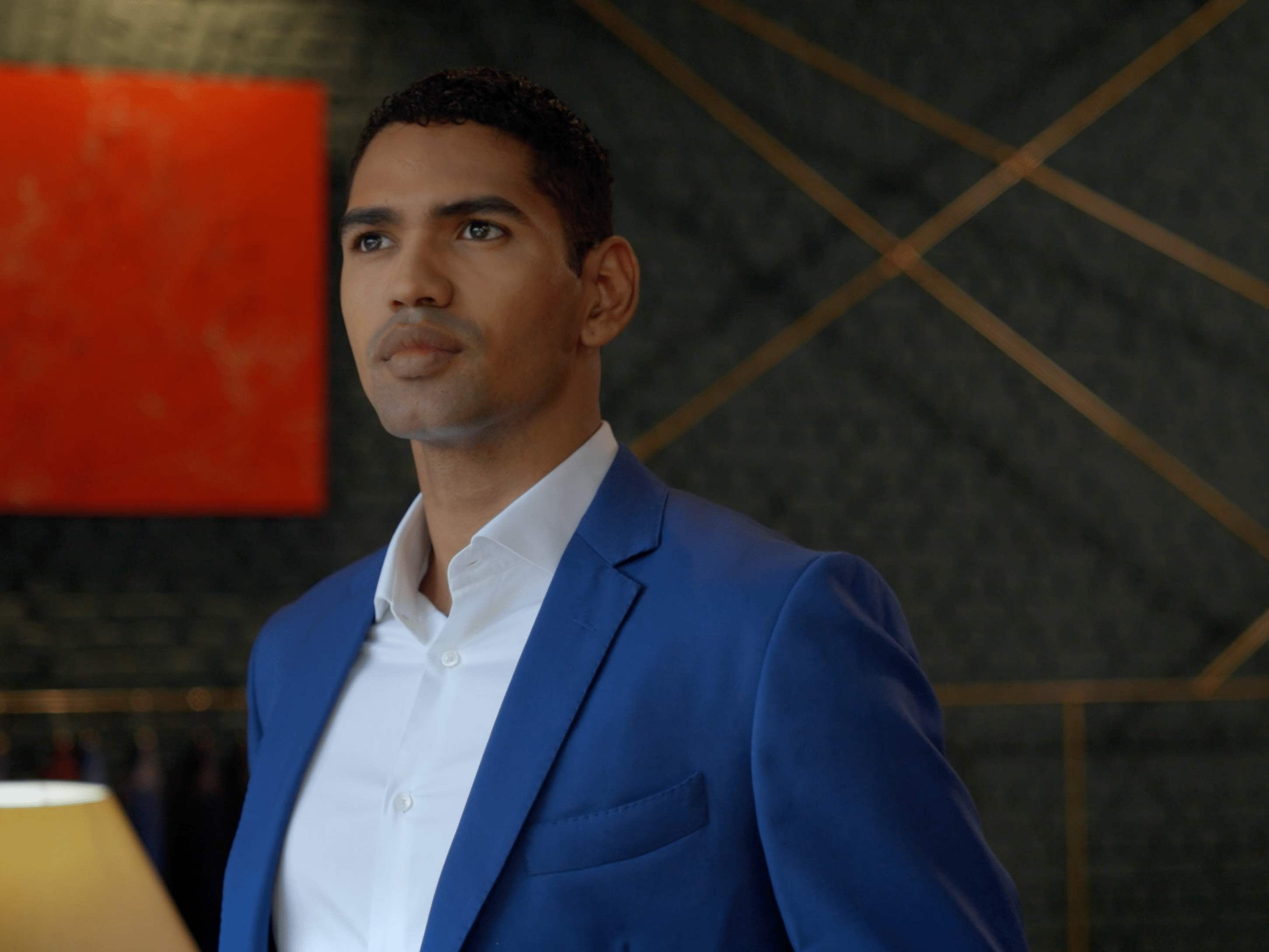
Baraa wasn’t just showing up to compete. He was showing up with something to prove. To himself, more than anyone else.
And that’s where the shift happened.
This stopped being about documenting a race.
It became about understanding a mindset.
It became about understanding a mindset.
Reframing the Approach
The decision was instinctive — strip it back.
No performative setups. No over-explaining. No playing to camera.
Just stay close. Close enough to catch the breath, the hesitation, the moments where things almost fall apart.
The camera doesn’t observe here. It follows. It reacts. It stays in motion because everything around it is.
There’s no clean coverage in a race like this. No second attempts. You either catch it or you don’t.
And that risk is exactly what gives it its edge.
The Team & The Setup
We were three. Myself, a second camera operator, and a camera assistant — moving as lightly as possible, carrying just enough to stay flexible, never enough to slow us down.
Two Sony FX3s. One paired with a 24–70, the other with a 70–200. No primes. No indulgence.
Zooms were the only logical choice. The environment demands it. You don’t get to move freely — you adjust your frame from wherever you’re standing.
We ran Black Pro-Mist across both setups. Just enough to take the edge off the digital sharpness, soften highlights, give the image a slight bloom — something that feels less clinical, more lived-in. No lighting rigs. No staging. No interruptions.
Everything you see is pulled from the environment as it existed.
The Reality of the Floor
HYROX doesn’t wait for you.
And it definitely doesn’t accommodate you.
This was our first time shooting it. We didn’t fully understand the flow of the course yet — how athletes move, how access shifts, how quickly things close off.
And then the race started.
Pathways shut. Barriers went up. Athletes moved through — and we were locked out.
We were shooting on audience passes, not official crew.
By the time we got back in, the first two stations were already done.
No coverage.
No coverage.
A clean miss.
Adapting Mid-Chaos
You don’t get time to process that. You adjust. We started reading the race differently — anticipating movement, finding angles before they closed, moving ahead of the crowd instead of reacting to it. From there on, it became instinct.
Shooting through gaps. Over shoulders. Catching moments just before they disappeared. Not perfect. But honest.
What This Became
Somewhere between missing shots, chasing moments, and letting go of control, the film found its identity.
What was meant to be a one-off turned into a beginning.
A format. A rhythm. A way of working that doesn’t rely on perfection — just presence.
This is Episode 01 of The Journey.
Not as a concept, but as something that unfolds over time.
Credits
Episode 01: Mumbai Mayhem – Team Kiwelon
Produced, Directed & Shot by Akshay Pawar
Second Camera Operator - Nisam Karattil
Edited by Nisam Karattil
Featuring - Baraa Lulu & Shelby
This isn’t a finished statement.
It’s the first chapter.
And like anything worth following — it only gets more complicated from here.